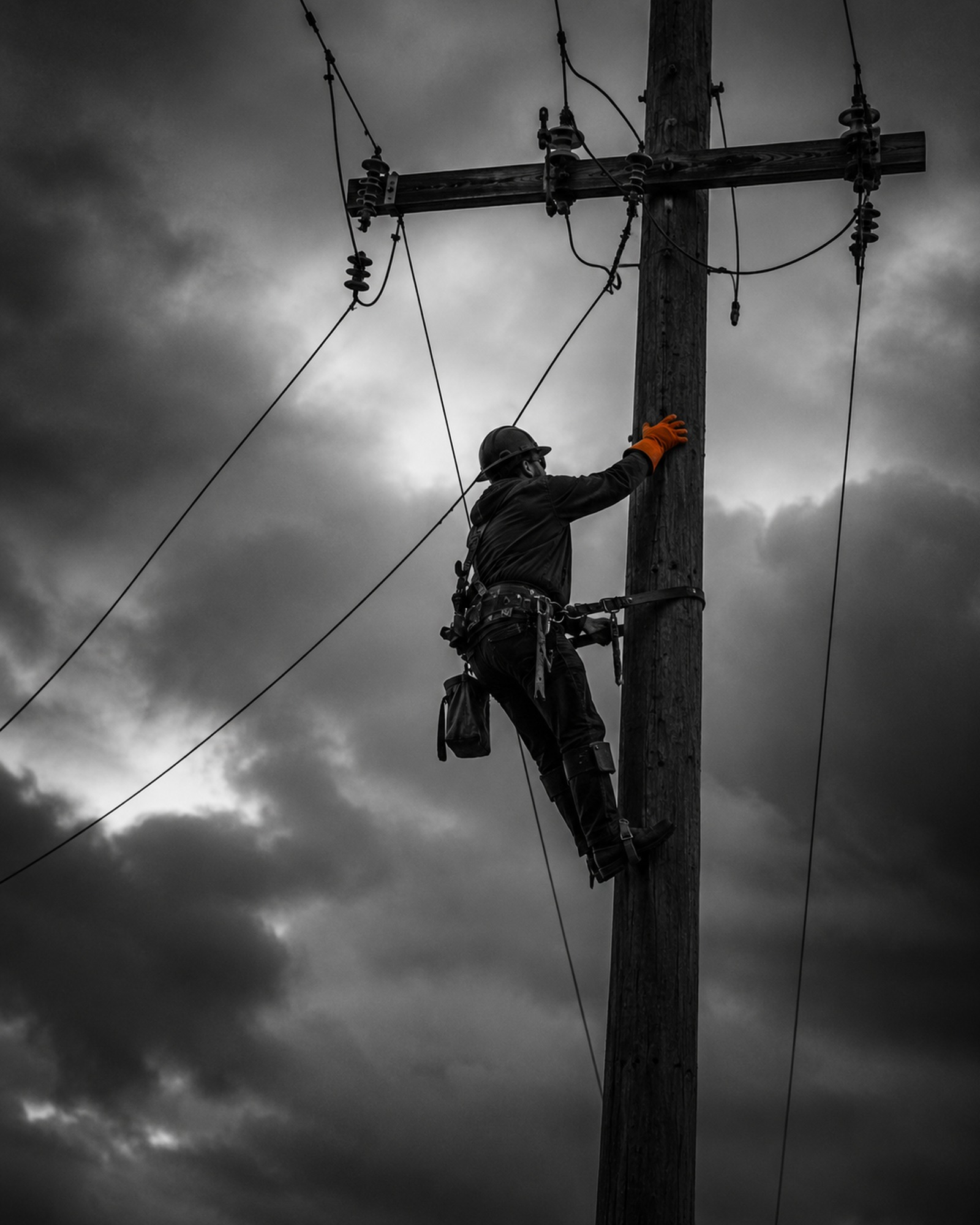
You keep the lights on for everyone else.
Power linemen build and maintain the grid itself — one of the highest-paid, most physically demanding, most respected trades there is. This guide breaks down real pay by experience level and what actually moves the number.
Linework
The U.S. Bureau of Labor Statistics tracks this trade under "electrical power-line installers and repairers" — that category posted a median annual wage of $92,560 as of May 2024, the most recent OEWS data available. The BLS also projects employment growth of 7% from 2024 to 2034 — much faster than average, with about 10,700 openings projected each year.
Entry level ($22–28/hr) is where most people start in this trade — typically through a formal apprenticeship, trade school program, or on-the-job training under a journeyman.
Journeyman ($40–55/hr) is where independent, unsupervised work authority kicks in — the point where most of the trade's workforce sits.
Master / top end ($58–75+/hr) covers senior specialists and crew leads — the people called in when the job is too complex or too urgent for anyone else.
Emergency restoration deployments pay time-and-a-half to double-time and can push annual earnings well past base median.
Natural gas distribution and electric power generation consistently post the highest-paying sectors for this trade.
The jump from ground-hand to journeyman lineman is one of the largest single pay increases in any trade in this network.
IBEW Outside Construction wage scales set a strong floor most non-union contractors have to compete with.
“Storm call at 2 AM, bucket up in the wind, and by sunrise a whole town has power again because you didn't go home.”
— A day in the life, Linework
Two-way street. Workers get matched to real openings. Employers get first look at qualified linework talent before we go public with the board.
Jobs In Linework is one of 13 trade-specific sites in the Careers In Trades network.